
Animal Applied Microbiology
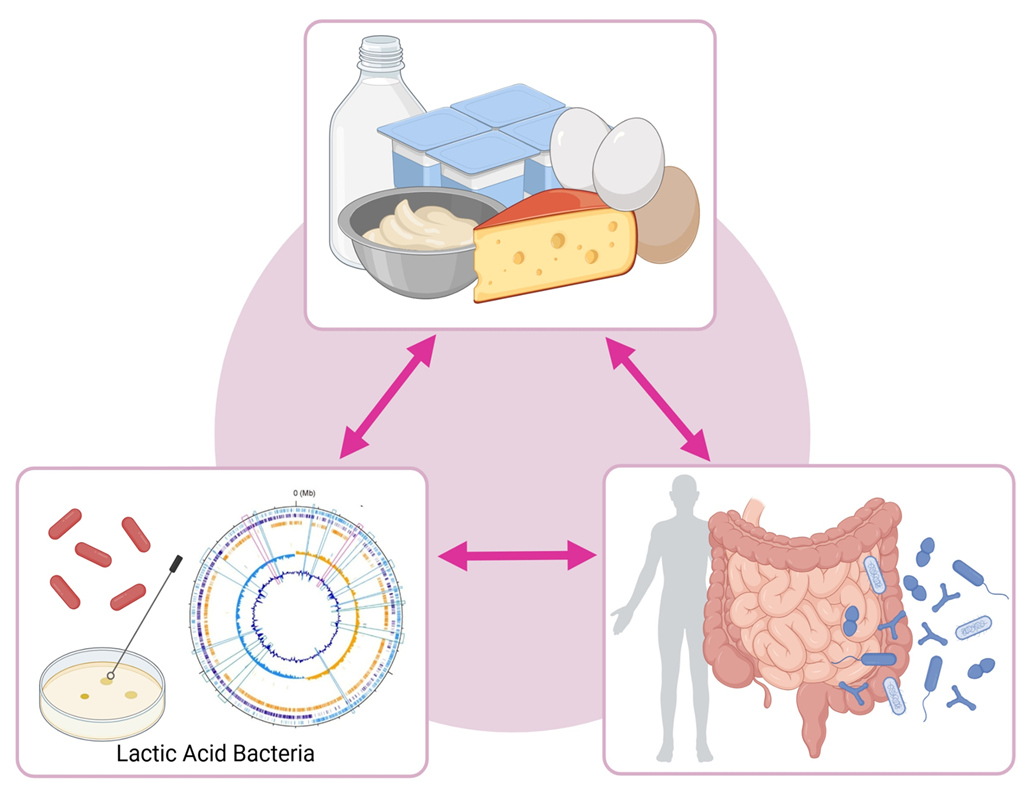
Animal-source foods, which are rich in nutritional value and sensory appeal, have long supported human health and enriched people’s diets. Our laboratory focuses particularly on milk and eggs, conducting research on their fermentation processing and physiological functions. The Arakawa Group aims to develop novel fermented milk and egg products with excellent sensory appeal and safety through the exploration and application of highly functional lactic acid bacteria. Meanwhile, the Shinoda Group seeks to elucidate how fermented milk influences human health via the gut microbiome.
 |
|
|---|
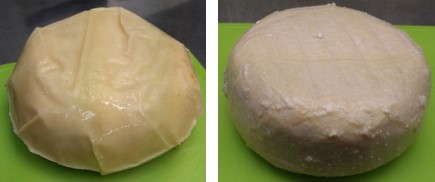
One year-ripened Jersey cheeses made with an independently developed starter containing antifungal lactic acid bacteria (left), and a commercial starter.
Milk is widely and regularly taken in due to the richness in nutrients and the excellence in processing and functions, but be very perishable. Therefore, the main issue in dairy industry is to secure the preservability and the safety of dairy products. In our laboratory, we try inhibiting foodborne pathogens and food-spoilage microorganisms in dairy products using antimicrobial substances produced by lactic acid bacteria as a natural-source preservative, namely “biopreservative”. Furthermore, fermentation and ripening control of mainly cheese is carried out using antimicrobials from lactic acid bacteria.
 |
|
|---|
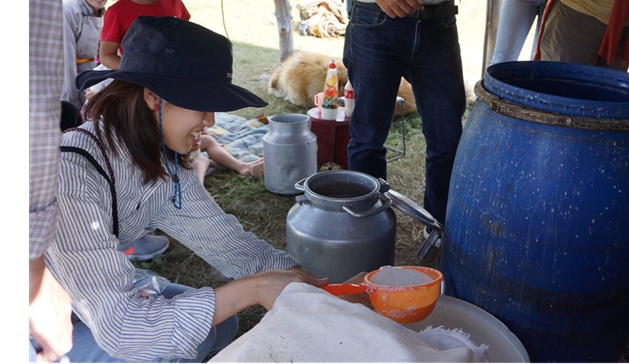
Collecting fermented dairy in a Mongolian herding community
The humans, animals, and the environment is not separate but connected as one through invisible microbes. Set against the Mongolian nomadic way of life that has continued for over 5,000 years, my research explores the microbial relationships that link people, animals, food, and the environment. I approach this from many angles, from the microbes in the traditional fermented mare’s milk “airag” and the gut bacteria of nomadic herders to the microorganisms drifting through arid lands. By rethinking the health of people and nature through the lens of microbes, I seek clues for a sustainable way of living.